Thanh Nguyen

Thanh Hai Nguyen

AI Researcher and Engineer - Software Architect - Senior Software Engineer

Researches: Knowledge Representation and Reasoning, Automatic Planning, Machine Learning

My Resume

About Me

I work at the intersection of Artificial Intelligence, Knowledge Representation, and Automated Reasoning, building systems that help organizations make explainable, high-stakes decisions at scale. I hold a Ph.D. in Computer Science — Artificial Intelligence from New Mexico State University, with publications in top-tier conferences and journals, and I am open to senior roles spanning:

  • AI Research Scientist
  • AI Engineer
  • AI Architect
  • Head of AI

My background spans neuro-symbolic AI, ontology-driven systems, reasoning engines, and large-scale AI platforms, with hands-on experience designing and delivering production systems — not just research prototypes. I focus on bridging formal reasoning and real-world data, combining symbolic methods, structured knowledge, and neural models (including LLMs) into practical, reliable systems. My core areas include Knowledge Representation, Automated and Non-monotonic Reasoning, Logic Programming, Meta-Programming, Compilers, Domain Modeling, Automatic Planning and Scheduling, the Semantic Web, and Natural Language Processing and Understanding.

Previously, at Elemental Cognition, I worked on reasoning engines and formal representation languages, helping build AI systems grounded in logic, constraints, and declarative knowledge. Today, at Growth Protocol, I lead work on enterprise AI reasoning platforms, agentic workflows, and decision intelligence systems used across industries including consumer goods, healthcare, insurance, energy, and finance.

With 15 years of industry experience across both back-end and front-end development, I care deeply about explainability, correctness, and long-term system design — especially in environments where data is ambiguous, dynamic, and incomplete. My goal is to push AI beyond black-box models toward systems that reason, adapt, and earn trust.

Work Experience

Principal AI Architect, Head of AI Growth Protocol Inc. (Jan 2026 - current)

New York, NY

  • AI Vision and Strategy: As Head of AI, define and own the technical vision, multi-year roadmap, and architecture for the Growth Protocol AI Platform; advise the executive team on AI strategy, opportunities, and risk, and direct the development of the company's entire AI product portfolio.
  • Enterprise AI Platform Architecture: As Principal AI Architect, own the end-to-end architecture of a neuro-symbolic platform that fuses LLMs, Machine Learning, and Deep Learning (Neural Network) models with Knowledge Graphs, ontologies, and symbolic reasoning to power agentic workflows, decision intelligence, and predictive analytics — setting standards for scalability, reliability, security, and maintainability across all AI services and across industries including consumer goods, healthcare and pharmaceuticals, financial services, energy, luxury retail, and professional services.
  • Multi-Agent Neuro-Symbolic Reasoning Engine: Lead the design, architecture, and development of a multi-agent, neuro-symbolic reasoning engine that integrates Ontologies, Knowledge Graphs, and a Rule-Based System with LLMs, Machine Learning, and Deep Learning (Neural Network) models — in which specialized agents collaborate to perform retrieval, logical inference, planning, and explanation over structured and unstructured knowledge to deliver trustworthy, traceable enterprise decisions.
  • Team Leadership and Talent Development: Build, hire, and lead a multidisciplinary team of Senior, Ph.D., and Master's-level AI engineers and data scientists across cross-functional, cross-platform teams; mentor engineers, set technical direction, and grow the organization's AI capability.
  • AI Product Delivery: Lead the development of all AI products end to end — from problem framing and architecture through delivery — aligning engineering execution with business outcomes and establishing standards for research, design, evaluation, and release.
  • AI Governance, Responsible and Explainable AI: Establish governance and responsible-AI practices — model evaluation and benchmarking, guardrails, data privacy and security, and end-to-end traceability — ensuring every AI-driven recommendation is explainable and auditable for high-stakes enterprise decisions.
  • MLOps/LLMOps and Production Reliability: Define and oversee the model lifecycle — experimentation, deployment, monitoring, and continuous improvement — and the LLMOps tooling, infrastructure, and evaluation pipelines that move research prototypes into reliable production systems.
  • Technology and Model Strategy: Drive build-vs-buy and model-selection decisions across foundation models, frameworks, and infrastructure, balancing capability, cost, latency, and risk to optimize platform performance and total cost of ownership.
  • Client and Stakeholder Engagement: Partner directly with enterprise clients and business stakeholders — including solution design and pre-sales — to translate high-stakes business problems into reliable, explainable AI solutions and align AI initiatives with measurable business value.
  • Research and Innovation: Lead applied research and invent new methodologies for the platform — spanning Agentic AI, neuro-symbolic reasoning, Knowledge Representation and Reasoning (KR&R), domain modeling, deep learning, and reinforcement learning — keeping Growth Protocol at the frontier of trustworthy, explainable enterprise AI.

Skills: AI Strategy and Vision, Enterprise AI Architecture, Team Leadership, Talent Development, AI Product Management, AI Governance, Responsible AI, Explainable AI, MLOps, LLMOps, Model Evaluation, Agentic AI, Neuro-Symbolic AI, Knowledge Representation and Reasoning, Knowledge Graph, Ontology, Domain Modeling, Large Language Models, Machine Learning, Deep Learning, Reinforcement Learning, Reasoning Engines, Decision Intelligence, Research and Development, Client Engagement, Multi-Agent Systems.

Senior Full-Stack AI Engineer, Principal AI Architect Growth Protocol Inc. (Feb 2025 - Jan 2026)

New York, NY

  • Agentic AI Intelligence Chatbot Framework: Designed, developed, and optimized an enterprise agentic AI assistant within the Growth Protocol AI Platform that delivers real-time market, financial, research, and consumer intelligence through natural-language conversation. Engineered on LangGraph and Retrieval-Augmented Generation (RAG) with Knowledge Representation, Natural Language Understanding, and advanced reasoning, producing a modular reasoning framework reusable across R&D, marketing, and executive-strategy functions and securely integrated with internal and external data sources.
  • AI-Powered Automatic Business Workflow Generation and Execution: Architected and built a system that semantically composes and orchestrates a registry of reusable atomic actions and core LLM, machine-learning, knowledge-retrieval, and reasoning engines into dynamic, multi-step analytical workflows — generated from natural-language intent and executed by a multi-agent reasoning engine that handles planning, tool invocation, dependency resolution, and explanation. Developed and led the development of 30+ production workflows — each a full enterprise-grade business-intelligence application in its own right — spanning patent and IP landscape analysis, scientific-literature and clinical-trial mining, market sizing and whitespace discovery, competitive and pricing intelligence, supply-chain and supplier analytics, warranty and risk analysis, demand forecasting, and consumer sentiment and segmentation, automating analyses that previously required weeks of expert manual work.
  • AI-Powered Reasoning Engine for Business Strategy: Designed, architected, and implemented a neuro-symbolic reasoning engine that fuses LLMs, Machine Learning, and Deep Learning (Neural Network) models with symbolic logic solvers (Answer Set Programming), ontologies, and knowledge graphs to reason over structured and unstructured business knowledge — enabling human-like causal analysis, “why” and “what-if” scenario simulation, and explainable, traceable strategic recommendations grounded in formal logic.
  • Recommendation, Forecasting, and Predictive Analytics: Built AI-driven recommendation systems and time-series forecasting models using Machine Learning and Deep Learning over large-scale signals — consumer behavior, investments, product launches, and market sentiment — to forecast market trends, financial values, and emerging opportunities, delivering personalized, domain-specific strategic recommendations to enterprise clients.
  • Generative AI and Full-Stack Delivery: Built generative AI applications — RAG pipelines with custom retrievers, embeddings, and vector databases; advanced information-extraction modules using LLMs and fine-tuned classifiers to mine facts, trends, and sentiment from unstructured sources; and intelligent planning systems — and delivered them full-stack, from back-end APIs and reasoning services to front-end interfaces.
  • Architecture, Trustworthy and Explainable AI: As Principal AI Architect, set the technical architecture and standards for these systems and enforced enterprise-grade transparency — ensuring every recommendation is traceable back to facts, rules, and logical inferences, aligning the platform with emerging standards for trustworthy and explainable AI at scale.

Skills: Natural Language Processing, Machine Learning, Large Language Models, Natural Language Understanding, Fine-tuning, Prompt Engineering, Agentic AI, Reasoning Engine, Neuro-Symbolic AI, Symbolic AI, Logical Reasoning, Non-monotonic Reasoning, Knowledge Representation and Reasoning, Knowledge Graph, Ontology, Domain Modeling, AI Planning, LangGraph, LangChain, RAG, Vector Databases, Deep Learning, Neural Networks, Time-Series Forecasting, Full-Stack Development, Multi-Agent Systems.

Senior Software Engineer (Machine Learning and LLMs) Reflective Intelligence LLC (Oct 2024 - Feb 2025)

New York, NY

  • Document Understanding and Processing: Built a Machine Learning and Large Language Model (LLM) pipeline to transform unstructured data (PDFs, Word documents, text files, websites, and articles) into accurate structured data formats. Applied text analysis, sentiment analysis, and natural language interpretation across domains such as Finance, Leasing, and Supply Chain to support downstream tasks including business report generation, market prediction, product recommendation, risk management, and resource optimization. Integrated structured knowledge into computational workflows to enhance operational efficiency and decision-making.
  • Document Classification and NLP Models: Developed document classification and understanding capabilities using pre-trained embeddings (including BERT-based models) and classical machine learning techniques. Integrated Hugging Face pipelines and fine-tuned pre-trained LLMs to build domain-specific applications.

Skills: Natural Language Processing, Machine Learning, LLM, Natural Language Understanding.

Senior AI Research Engineer, Senior Software Engineer Elemental Cognition Inc. (July 2021 - August 2024)

New York, NY

  • Knowledge Representation and Reasoning: Developed domain-specific knowledge bases and built comprehensive logical inference mechanisms to represent domain-independent knowledge using logical reasoning, meta-programming, and functional programming, across domains including complex travel planning, supply chains, and higher education. Designed and built Cogent, a new formal representation language for domain modelling that captures business knowledge in natural language: (1) a subset of English, (2) with formal syntactic and semantic properties of a representation language, and (3) executable by a Reasoning Engine. I served as both a Compiler Front-End Engineer (compiling Cogent into valid IML) and a Compiler Back-End Engineer (transforming IML into low-level Cordial rules and facts), and as a Knowledge Engineer designing and implementing the semantics of the language.
  • Machine Learning and LLMs: Built a model-assistance system using Large Language Models (LLMs), Natural Language Processing (NLP), and Machine Learning to translate natural language inputs into Cogent statements, supporting users through dialog-chat and online-correction modalities.
  • Reasoning Engine Development: Contributed to developing the Reasoning Engine that executes reasoning tasks grounded in logic programming and constraint-oriented methodologies, applied in production to tasks such as the OneWorld Round-The-World travel planning system.
  • Knowledge Implementation: Developed Automated and Non-monotonic Reasoning algorithms to implement and model EC's application domains using logic programming languages such as Cordial and ASP.
  • Software Engineering/Development: Contributed to software development for EC's commercial applications, ensuring robustness and efficiency across projects and initiatives. On the Round-The-World project, developed new theory features and associated back-end functionality, supported the back-end team, fixed theory-related bugs, and conducted unit, integration, and automated testing.

Skills: Natural Language Processing, Software Engineering, Knowledge Representation and Reasoning, Machine Learning, LLM, Logic Programming, Natural Language Understanding, Domain Modeling, Compilers, Automatic Reasoning and Planning, Functional Programming, Scala, Scalability, Reliability, Meta-Programming.

Senior Software Architect/Engineer Jornada Experimental Range, USDA and New Mexico State University (2013 - 2021)

Las Cruces, NM

  • Designed and initiated the software architecture for the entire LandPKS project, ensuring seamless integration between all project components. This involved overseeing the system design from inception to final end-user experience.
  • Developed data analytic systems and prediction models based on machine learning techniques to extract maximum knowledge from provided soil profiles, weather, climate conditions, water data, GIS, and other relevant datasets. These models are used to comprehensively analyze soil potential, providing valuable information and prediction data for farmers and users.
  • Developed the LandPKS back-end API system, enabling clients (such as web portals and mobile apps) to connect to and access LandPKS core data, and to interact with data analytic systems and prediction models.
  • Developed mobile applications for both Android and iOS platforms, enabling users to collect and interact with LandPKS data as well as view predictive data visualizations.
  • Developed a big-data processing module using Hadoop to create accessible climate data and soil profiles for locations worldwide.
  • Developed a data portal that analyses and displays data.

Skills: Back-End Web Development, SQL, NoSQL databases, Scalability, Mobile Application Development, RESTful Web Services, API System.

Senior Software Engineer New Mexico State University, Phylotastic (2015 - 2018)

Las Cruces, NM

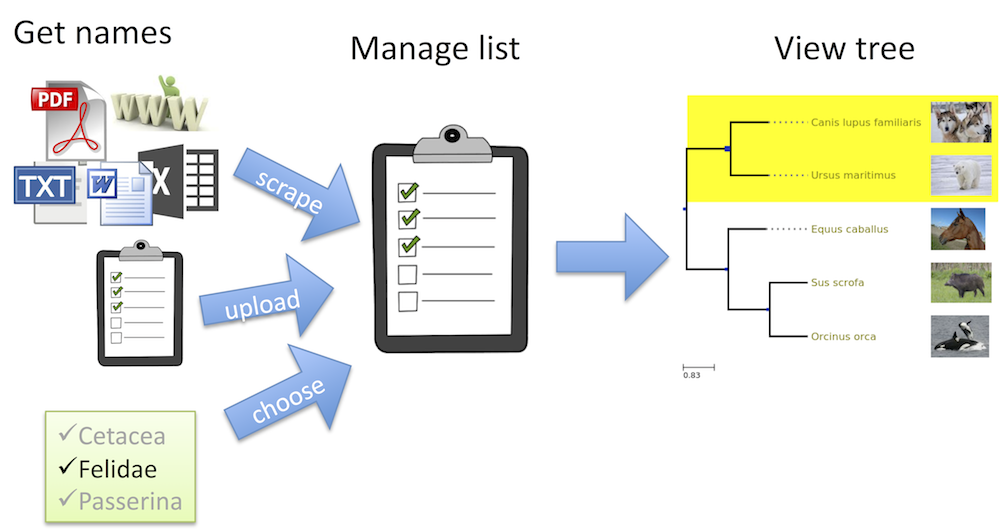
  • Implemented semantic integration for the Phylotastic Web Services System.
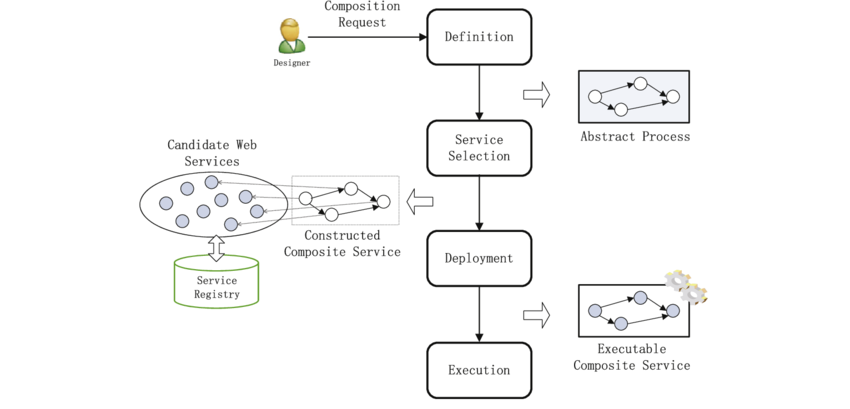
  • Integrated and applied an Automatic Web Services Composition Framework to create, manipulate, and evolve phylogenetic biology workflows.
  • Developed and extended Phylotastic web services.
  • Developed a mobile application for generating phylogenetic trees based on Phylotastic web services, available on both Android and iOS.
  • Developed Phylotastic Portal.

Skills: Formal Semantic, Mobile Application Development, Semantic Web, RESTful Web Services, API/SDK.

Deputy Director of Research & Development Center Vivas LLC., VNPT Technology (VNPT Group) (2012 - 2013)

Hanoi, Vietnam

  • Managed the Research and Development department's technical area.
  • Researched and applied new technologies to current projects.
  • Consulted and led the software architecture development for various company products.

Senior Software Architect/Engineer & Technical Team Leader Vivas LLC., VNPT Technology (VNPT Group) (2011 - 2013)

Hanoi, Vietnam

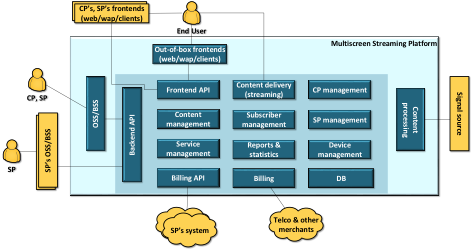
  • Designed and developed a multi-screen video streaming platform.
  • Designed and developed CDN (Content Delivery Network) and CMS (Content Management System) systems, along with the multi-screen video streaming platform API.
  • Developed a video streaming mobile application for Android, iOS, and a web portal.

Software Engineer FPT-IS/FPT-Software, FPT Company (2008 - 2009)

Hanoi, Vietnam

  • Developed a system (WTCS_TT) enabling banks to directly collect tax from taxpayers.
  • Developed a system to manage and collect personal income tax for the Vietnam Tax Department.

Publications

1. The Land Potential Knowledge System: Generating site-specific estimates of land potential productivity and degradation risk using a mobile application and cloud computing. 2015 AgMIP 5th Global Workshop. Joshua Beniston, Adam Beh, Thanh Nguyen, Lilian Ndungu, Jason Karl, Jeffrey Herrick.

2. Automatic Web Services Composition for Phylotastic. PADL 2018 20th International Symposium on Practical Aspects of Declarative Languages. Conference Full-Paper. Thanh Hai Nguyen, Tran Cao Son, Enrico Pontelli. https://doi.org/10.1007/978-3-319-73305-0_13

3. Phylotastic: An Experiment in Creating, Manipulating, and Evolving Phylogenetic Biology Workflows Using Logic Programming. ICLP 2018 34th International Conference on Logic Programming. TPLP Theory and Practice of Logic Programming Journal 2018. Conference Full-Paper and Journal Research. Thanh Hai Nguyen, Tran Cao Son, Enrico Pontelli. https://doi.org/10.1017/S1471068418000236

4. An Automatic Web Services Composition Framework over Biological Domain and Specifications. The 15th International Conference on Logic Programming and Nonmonotonic Reasoning LPNMR 2019. Doctoral consortium presentation. Thanh Hai Nguyen. https://dbai.tuwien.ac.at/lpnmr-dc-19/

5. Phylotastic: Improving Access to Tree-of-Life Knowledge with Flexible, on-the-Fly Delivery of Trees. Evolutionary Bioinformatics Journal 2020. Journal Research. Thanh H Nguyen, Van D. Nguyen, Abu Saleh Md. Tayeen, H. Dail Laughinghouse IV, Luna L. Sanchez-Reyes, Enrico Pontelli, Dmitry Mozzherin, Brian O'Meara, Arlin Stoltzfus. https://doi.org/10.1177/1176934319899384

6. Design and Implementation of Phylotastic, a Service Architecture for Evolutionary Biology. International Journal of Software Engineering and Knowledge Engineering IJSEKE 2020. Journal Research. Abu Saleh Md Tayeen, Thanh H Nguyen, Van Nguyen, Enrico Pontelli. https://doi.org/10.1142/S0218194020500382

7. On Repairing Web Services Workflows. The 22nd International Conference on Practical Aspects of Declarative Languages PADL 2020. Conference Full-Paper. Abu Saleh Md Tayeen, Thanh H Nguyen, Tran Cao Son, Enrico Pontelli. https://doi.org/10.1007/978-3-030-39197-3_3

8. Specifying and Reasoning about Concerns in Cyber-Physical System Using Answer Set Programming. KR-2020 17th International Conference on Principles of Knowledge Representation and Reasoning. Poster presentation. Thanh H Nguyen, Tran Cao Son, Matthew Bundas, Marcello Balduccini, Kathleen Campbell Garwood, Edward R. Griffo. https://kr2020.inf.unibz.it/program/

9. Reasoning about Trustworthiness in Cyber-Physical Systems Using Ontology-Based Representation and ASP. PRIMA-2020 The 23rd International Conference on Principles and Practice of Multi-Agent Systems. Conference Full-Paper. Thanh H Nguyen, Tran Cao Son, Matthew Bundas, Marcello Balduccini, Kathleen Campbell Garwood, Edward R. Griffo. http://dx.doi.org/10.1007/978-3-030-69322-0_4

10. Specifying and Reasoning about CPS through the Lens of the NIST CPS Framework. TPLP Theory and Practice of Logic Programming Journal 2021. Journal Research. Thanh H Nguyen, Tran Cao Son, Matthew Bundas, Marcello Balduccini, Kathleen Campbell Garwood, Edward R. Griffo. https://doi.org/10.1017/S1471068422000035

11. Towards a Framework for Characterizing the Behavior of AI-Enabled Cyber-Physical and IoT Systems. IEEE World Forum on Internet of Things (WF-IOT 2021). Conference Full-Paper. Matthew Bundas, Chasity Nadeau, Thanh H Nguyen, Jeannine Shantz, Marcello Balduccini, Tran Cao Son. https://doi.org/10.1109/WF-IoT51360.2021.9595077

12. Facilitating stakeholder communication around AI-enabled systems and business processes. Research Handbook on Artificial Intelligence and Communication 2023. Book chapter. Matthew Bundas, Chasity Nadeau, Thanh H Nguyen, Jeannine Shantz, Marcello Balduccini, Tran Cao Son. https://doi.org/10.4337/9781803920306

13. LandPKS (Land Potential Knowledge System): Mobile App for Extension, Land-Use and Project Planning, M&E and On-Farm Research. USDA Agriculture Data Articles. Book chapter. Herrick, Jeffrey E.; Quandt, Amy; Kenny, Ciaran; Contreras, Maximilian; Neff, Jason; Jang, Won Seok; Maynard, Jonathan; Peacock, George; Salley, Shawn; Daniel, Elifadhili; Buni, Adane; Ndungu, Lilian; Herrera, Jolene M.; Nguyen, Thanh; Terrones, Luis; Karl, Jason; Kimiti, David; Nauman, Travis; Uruma, Kevin; Schrader, Scott; Courtright, Ericha; Van Zee, Justin. https://hdl.handle.net/10113/AA22842

Latest Projects


TVoD TVoD

TVOD - Multiple-screens Video Streaming Platform

This platform was built based on two core systems : CMS (Content Management System) and CDN (Content Delivery Network). In addition, there are some other involved components : TVOD API System, TVOD Transcoding Software, TVOD Portal, TVOD Mobile Applications and Admin System. This platform provide completed system that serves Video content (Video on Demand and Live Streaming content) to end-users in multiple-screens, multiple-platforms.

Find out more

View on GitHub

VNPT CDN

VNPT Technology CDN platform

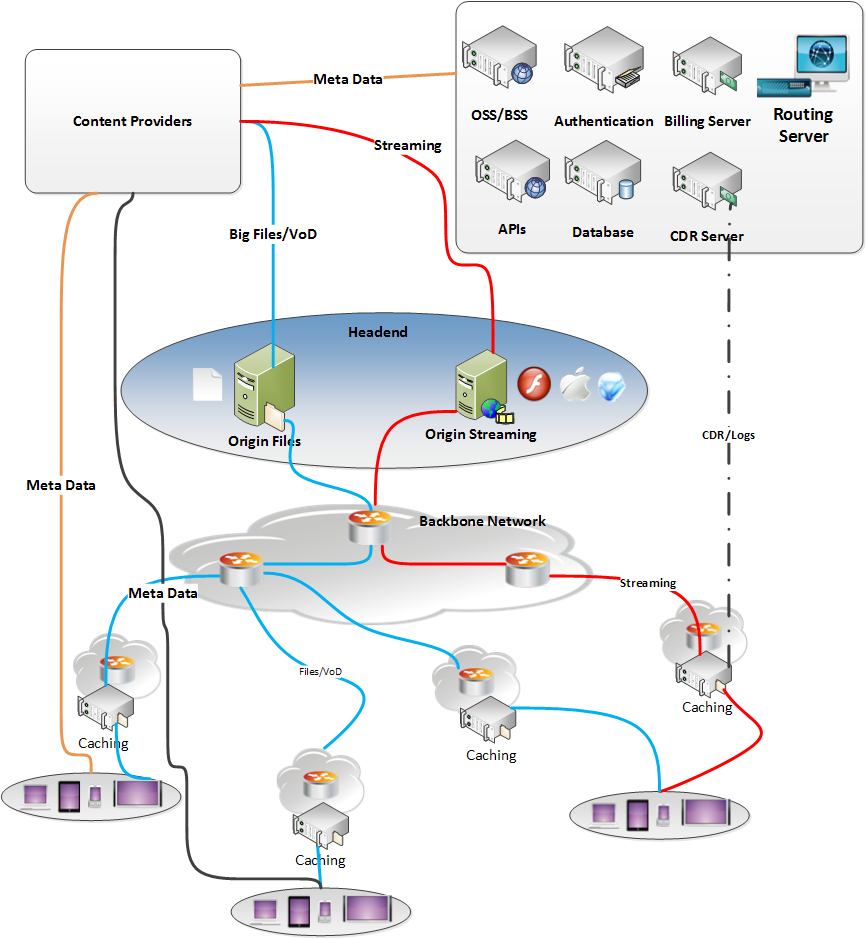
CDN (Content Delivery Network) is VNPT Technology’s solution for delivering content to end users reliably and efficiently. CDN is consisted on a large distributed network of server nodes deployed on VNPT’s backbone network with servers located in many data centers across Vietnam. This network of server helps optimize network traffic and deliver content to end-users with best download speed and best quality. With CDN, content provider can have their content delivered to users easily with best quality without investing in expensive hosting facility.

Find out more

View on GitHub

Other Projects

Rosetta Open Source

Rosetta-NRCS is a program developed by the USDA-ARS Salinity Lab in Riverside, CA. The only difference in the ARS Rosetta version and the Rosetta-NRCS version is that Rosetta identifies only the depth to the bottom of a soil layer. Rosetta-NRCS identifies both the top and bottom of a soil layer.
Rosetta can be used to estimate the following properties:

  • Water retention parameters according to van Genuchten (1980)
  • Saturated hydraulic conductivity
  • Unsaturated hydraulic conductivity parameters according to van Genuchten (1980) and Mualem (1976)

View on GitHub

View more

My GitHub

GitHub Calendar

Loading the data just for you.

Github Activities